TikTok Shop Supplement Requirements: Eligibility, Labels, Lab Reports, and the Listing Disclaimer
TikTok Shop's US supplement category is invite-only, and eligibility is checked before copy: FDA facility registration, cGMP proof, a lab report issued within 180 days, and label photos. Here are the three gates, the exact DSHEA disclaimer TikTok wants on the listing, and the claim patterns that still fail.
Most sellers preparing a supplement launch on TikTok Shop spend their time rewriting claims. In the US, the TikTok Shop supplement requirements start earlier than that. Dietary supplements are invite-only, and the platform’s Dietary Supplements Requirements page (dated 10/09/2026) can ask for facility registration, cGMP proof, a recent lab report, and unedited label photos before a listing is judged on its wording. A clean script cannot rescue a product that never cleared eligibility, and a perfect lab report cannot rescue a listing that makes a disease claim.
This article walks through the three gates in the order they usually fail: eligibility and documents, the label and listing disclaimer, then claims. Sources were opened on 2026-10-21. Platform rules and federal guidance change, so re-check the linked originals before you submit.
Gate 1: TikTok Shop supplement eligibility is invite-only
TikTok Shop’s US supplement policy states that eligibility is limited to invite-only sellers and directs sellers to their Account Manager. The page lists five permitted groups: beauty supplements, fitness supplements, vitamins/minerals/wellness supplements, herbal supplements, and sexual wellness supplements such as testosterone boosters and sexual performance enhancers.
Two product-level rules sit alongside the invitation:
- High-dose vitamins and minerals. A listing whose single serving exceeds the adult Tolerable Upper Intake Level (UL) for a vitamin or mineral with an adverse-effect UL is subject to immediate enforcement. TikTok Shop says compliance is determined by the actual formulation, so lowering the stated serving size or nutrient amount on the product detail page does not fix it.
- Prohibited supplement types. The same page lists weight management supplements, mental wellness supplements, CBD and other hemp-derived cannabinoids, products named in FDA recalls or warning letters, products with unapproved drug ingredients (it names peptides and GLP-1 agonists), adulterated or misbranded products, controlled substances, endangered-species ingredients, and pure or highly concentrated caffeine sold in bulk.
Documents TikTok Shop asks for before the listing review
The paperwork differs for manufacturers/importers/repackers and for resellers. The table below summarizes what the policy page says each document must show; it is a reading aid, not a substitute for the page.
| Who | Document | What TikTok Shop says it must show | Common failure |
|---|---|---|---|
| Manufacturer, importer, or repacker | Proof of FDA food facility registration | Registered establishment name matching the manufacturer or importer on the label; physical address; operation type; valid at submission. A third-party verification letter or an FDA Direct screenshot is accepted, and a screenshot must clearly come from the official FDA site. | Name on the registration does not match the name printed on the product label. |
| Manufacturer | cGMP certification | Valid at submission and confirming compliance with 21 CFR Part 111. | An expired certificate, or a certificate for a different facility. |
| Manufacturer, importer, repacker, or reseller | Product lab test report | Issued within the last 180 days; product matches the invoice, brand, and manufacturer; same company name and address as the selling account; covers microbiological testing, heavy metals, contaminants, and potency/label-claim verification. | A report older than 180 days, or one that tests an ingredient rather than the finished product. |
| Reseller | Purchase invoice or proof of purchase | Dated within 180 days; same name and address as the selling account; full manufacturer or distributor name and address; at least 400 units combined; English or Chinese. | A retail receipt rather than a distributor invoice. |
| Any seller | Label photos | Clear, unedited, high-resolution photos of the physical packaging: front, back, and side labels, permanently affixed and legible. | Digital mockups, flat design files, or edited label images, which the policy says are not accepted. |
Two details are easy to miss. For supplements marketed for sexual enhancement or bodybuilding, the lab report must also document testing for known adulterants under NSF/ANSI 173-2024. And the accepted-lab list includes Eurofins, NSF International, SGS, UL Solutions, TÜV Sud, Mérieux NutriSciences, Intertek, Certified Laboratories, QIMA, Bureau Veritas, ACT Lab, SGT, and API; an in-house ISO/IEC 17025 lab is accepted only with a valid ISO certificate, and an in-house lab otherwise needs a cGMP certificate for 21 CFR 111 or 117.
Gate 2: the label has to be photographed, not designed
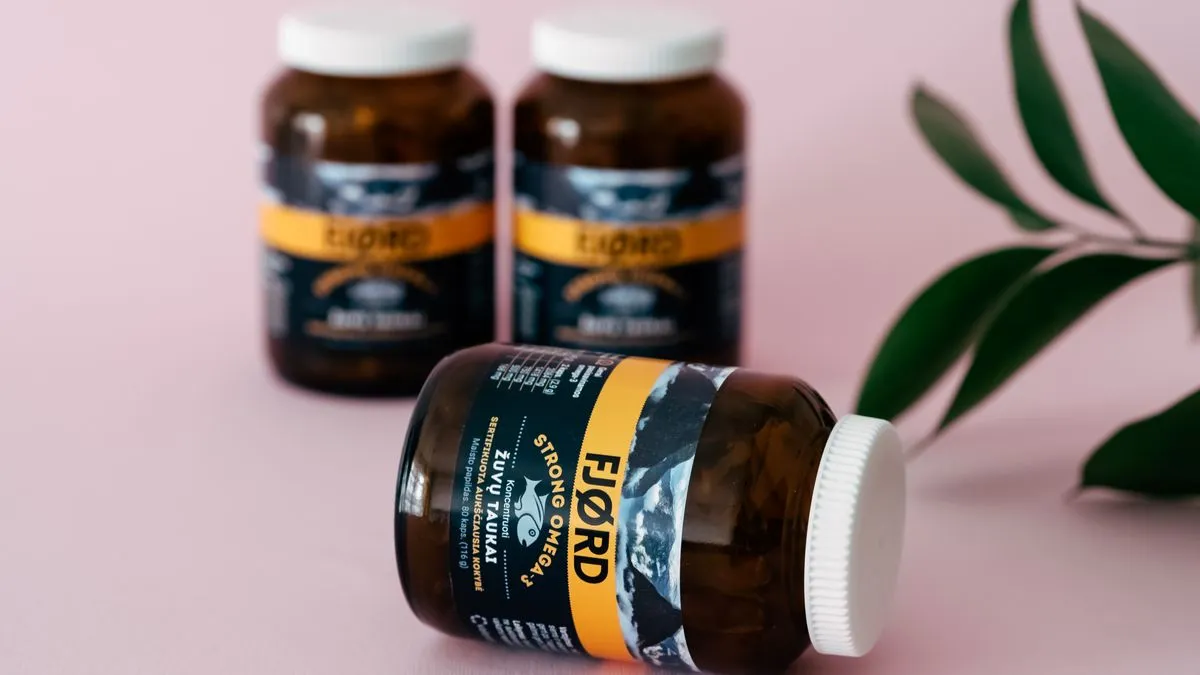
TikTok Shop’s label checklist follows FDA labeling categories. The front label needs a statement of identity that names the product and uses “Dietary Supplement” or a recognized equivalent such as “Herbal Supplement,” plus the net quantity of contents. The Supplement Facts panel needs serving size and servings per container, dietary ingredients and quantities with percent Daily Value where required, proprietary blend totals with ingredients in descending order by weight, a separate “Other Ingredients” list, and major allergen declarations.
The back or side panel needs the manufacturer, packer, or distributor name and physical street address; a domestic US mailing address or US telephone number for serious adverse event reports; directions for use; and the FDA disclaimer when the label or listing makes a structure/function claim. The policy explicitly rejects mockups and flat graphic files, so a launch that only exists as a design file is not ready for review.
The disclaimer TikTok wants on the listing itself
This is where platform policy goes beyond the bottle. TikTok Shop states that the disclaimer “must appear on the product listing and on the product label,” and that listings making a structure/function claim but omitting the disclaimer are subject to enforcement. The required text is:
This statement has not been evaluated by the Food and Drug Administration. This product is not intended to diagnose, treat, cure, or prevent any disease.
The wording matches 21 CFR 101.93(c), the federal regulation for structure/function statements on dietary supplements. That regulation requires the disclaimer to be placed with the statement, set off in a box when it is not adjacent, and printed in boldface type no smaller than one-sixteenth inch. It also requires the firm to notify FDA no later than 30 days after first marketing a product with such a statement, and to have substantiation that the statement is truthful and not misleading.
Two limits matter. First, the disclaimer is not a universal pass: a disease claim does not become a structure/function claim because the box is present. Under 21 CFR 101.93, a statement that claims to diagnose, mitigate, treat, cure, or prevent disease is a disease claim under paragraph (g), and the product is subject to regulation as a drug unless the claim is an authorized health claim. Second, federal labeling law and TikTok’s listing rule are separate obligations. A compliant bottle does not automatically make the listing compliant, and the reverse is also true.
Gate 3: claims that fail before anyone argues about evidence
The supplement policy page gives its own examples of prohibited disease and medical claims, including “Cures cancer,” “treats diabetes,” “Reduces risk of gestational diabetes,” “Lowers cholesterol,” “Targets blood sugar levels,” “Stops hair loss,” “Treats eczema or psoriasis,” and “Kills cold and flu viruses.” It also flags “Anxiety & Stress Relief” as a product title for a food supplement. The page is explicit that implied claims count: marketing a product as targeting blood sugar levels may be treated as a diabetes-related claim even when the word “diabetes” never appears.
| Claim pattern | Why it fails | Safer direction (illustrative, not a guarantee) |
|---|---|---|
| “Supports healthy blood sugar” used as a way to imply diabetes control | TikTok Shop treats implied disease claims as claims; blood-sugar targeting is its own example. | Describe the product’s general nutritional role without naming or pointing at a condition, and keep the evidence file for whatever you do say. |
| “FDA approved” or “FDA certified” | The policy prohibits FDA and regulatory approval claims. FDA states that it does not approve dietary supplements for safety and effectiveness. | Remove the approval claim entirely. Facility registration and cGMP compliance are not approvals. |
| “Clinically proven to lower cholesterol” | Disease endpoint plus an evidence claim; the policy lists “Lowers cholesterol” as prohibited. | Do not swap in a synonym for the same disease outcome. Rebuild the claim around a substantiated structure/function effect, with the disclaimer, or drop it. |
| “Helps you lose 10 lb in a month” | Weight management supplements are prohibited in the category, and quantified weight-loss claims are high-risk content. | This is a product-eligibility problem, not a wording problem. Do not list the product as a weight-management supplement. |
Keep the categories separate in your own review. A claim can be acceptable as a structure/function statement and still fail because the product is not eligible, the listing lacks the disclaimer, or the same message appears in a video that TikTok treats as a high-risk weight-management claim.
What the August 2026 weight-management change did not do
TikTok Shop’s US Weight Management Guide (08/31/2026) says the update began rolling out in late July 2026, with full enforcement starting August 8, 2026. General, low-risk weight-loss claims for adults 18 and over are no longer controlled; quantified or timeline promises, before-and-after body comparisons, GLP-1 equivalence, and intentional-misuse content remain prohibited.
That relaxation applies to content, not to product eligibility. The supplement requirements page still lists weight management supplements as prohibited, including appetite suppressants, carbohydrate-control supplements, diet shakes, fat burners, weight-loss bars, and meal-replacement bars or drinks. If your product is a weight-management supplement, the relevant question is not how to phrase the video. It is whether the product can be sold in the category at all. For the content-side rules, see the TikTok Shop weight management policy guide.
The federal substantiation layer
Platform review is not the only test. FDA’s 2009 guidance on substantiation for dietary supplement claims uses “promotes weight loss” as an example: a firm relied on a randomized controlled trial showing a small but significant increase in metabolism over 24 hours, but the study did not measure weight and there was no research connecting that short-term change to measurable weight loss. FDA said the weight-loss claim would likely not be adequately substantiated.
The same guidance says competent and reliable scientific evidence would consist primarily of human studies, and that animal studies, in-vitro studies, and testimonials or anecdotes alone generally would not be sufficient. It also notes that FDA intends its substantiation standard to be consistent with the FTC’s “competent and reliable scientific evidence” standard for health claims in advertising. None of this is a labeling loophole: a better-written claim with weak support is still a weak claim.
A review order that matches how the gates fail
This order follows the TikTok Shop supplement requirements from access to evidence, because a later gate cannot repair an earlier one.
- Confirm category access. Are you invited, and does the product fit a permitted supplement group? Resolve this with your Account Manager before producing assets.
- Check document freshness and identity. Is the lab report within 180 days? Do the company name and address match the selling account, invoice, and label? Is the cGMP certificate current and tied to the right facility?
- Inspect the physical label, not the design file. Photograph front, back, and Supplement Facts. Confirm the statement of identity, net quantity, allergen callouts, adverse-event contact, and directions.
- Put the disclaimer on both surfaces. Use the exact 21 CFR 101.93(c) text on the label where a structure/function claim appears, and add it to the listing as TikTok requires.
- Read for disease and implied-disease claims. Search titles, bullets, A+ content, image text, captions, and scripts for condition names and for endpoints that point at a condition, such as blood sugar, cholesterol, hair loss, or psoriasis.
- Separate content risk from product risk. A low-risk weight statement in a video does not make a weight-management supplement sellable, and a permitted product can still produce a high-risk video.
- Keep the evidence file with the claim. Store the study, the population, the dose, and the exact wording it supports. If the study tested an ingredient rather than your finished product, do not treat it as automatic support.
What a text checker can and cannot do
A claim checker can flag disease language, approval claims, and weight-management phrasing in a draft listing, caption, or script, and suggest a narrower rewrite. It cannot verify facility registration, cGMP status, lab-report authenticity, label layout, UL limits, or category access, and it cannot guarantee that TikTok will approve a listing. Those are document and product decisions. Use text review as one gate, not the whole gate.
Frequently asked questions
Can I sell dietary supplements on TikTok Shop without an invitation?
No. The US Dietary Supplements Requirements page states that eligibility is limited to invite-only sellers and that sellers should contact their Account Manager. Creating a compliant listing does not create category access.
Does the FDA disclaimer make a disease claim acceptable?
No. The disclaimer belongs with structure/function statements. A claim to diagnose, treat, cure, or prevent disease can make the product a drug under 21 CFR 101.93(g), and TikTok Shop separately prohibits disease and medical claims in supplement listings.
How old can the lab test report be?
The policy says the report must be issued within the last 180 days, match the product and invoice, show the same company name and address as the selling account, and cover microbiological testing, heavy metals, contaminants, and potency or label-claim verification.
Are weight-loss supplements allowed now that TikTok relaxed weight-loss wording?
No. The August 2026 change concerns general, low-risk weight-loss claims in content for adults. The supplement requirements page still lists weight management supplements as prohibited products.
Can I submit a designed label instead of a photo of the physical package?
No. TikTok Shop says digital mockups, flat graphic design files, and edited or photoshopped label images are not accepted. Submit clear, unedited, high-resolution photos of the actual front, back, and side labels.
Sources
- TikTok Shop · Dietary Supplements Requirements (applies to United States; page dated 10/09/2026; reviewed 2026-10-21). seller-us.tiktok.com
- TikTok Shop · Prohibited Products Policy (United States; page dated 10/20/2026; reviewed 2026-10-21). seller-us.tiktok.com
- TikTok Shop · Requirements for Responsible Health-Related Content (United States; page dated 09/02/2026; reviewed 2026-10-21). seller-us.tiktok.com
- TikTok Shop · Weight Management Guide (United States; page dated 08/31/2026; reviewed 2026-10-21). seller-us.tiktok.com
- eCFR · 21 CFR 101.93 — Certain types of statements for dietary supplements (current as of 10/19/2026; reviewed 2026-10-21). ecfr.gov
- FDA · Guidance for Industry: Substantiation for Dietary Supplement Claims Made Under Section 403(r)(6) (January 2009; reviewed 2026-10-21). fda.gov
- FDA · Is It Really ‘FDA Approved’? (content current as of 05/04/2026; reviewed 2026-10-21). fda.gov
This article explains published platform rules and federal labeling concepts for general information. It is not legal advice. TikTok Shop, FDA, and the FTC make their own determinations, and a disclaimer or rewrite does not guarantee approval or compliance.
To flag disease language, FDA-approval wording, and weight-management phrasing in a draft, run it through the supplement claim checker. For the broader claims framework, read the TikTok Shop medical-claims guide, and see how TikTok Shop compliance checks cover listings, videos, and LIVE scripts.
Let automated checks keep track of these rules
Sign up to receive 100 credits and check English copy, videos, and images, with the regulation or platform rule behind every flag.
Sign up for free