Children's Sleepwear Regulations: What 'Flame Resistant' and 'Snug-Fitting' Require on a US Listing
Children's sleepwear is regulated by size and construction, not by the word "pajamas." A tight-fitting garment is labeled "NOT FLAME RESISTANT," so a listing that calls it flame retardant contradicts the required label. Here are the three compliance paths, the claims each can support, and the documents TikTok Shop may ask for.
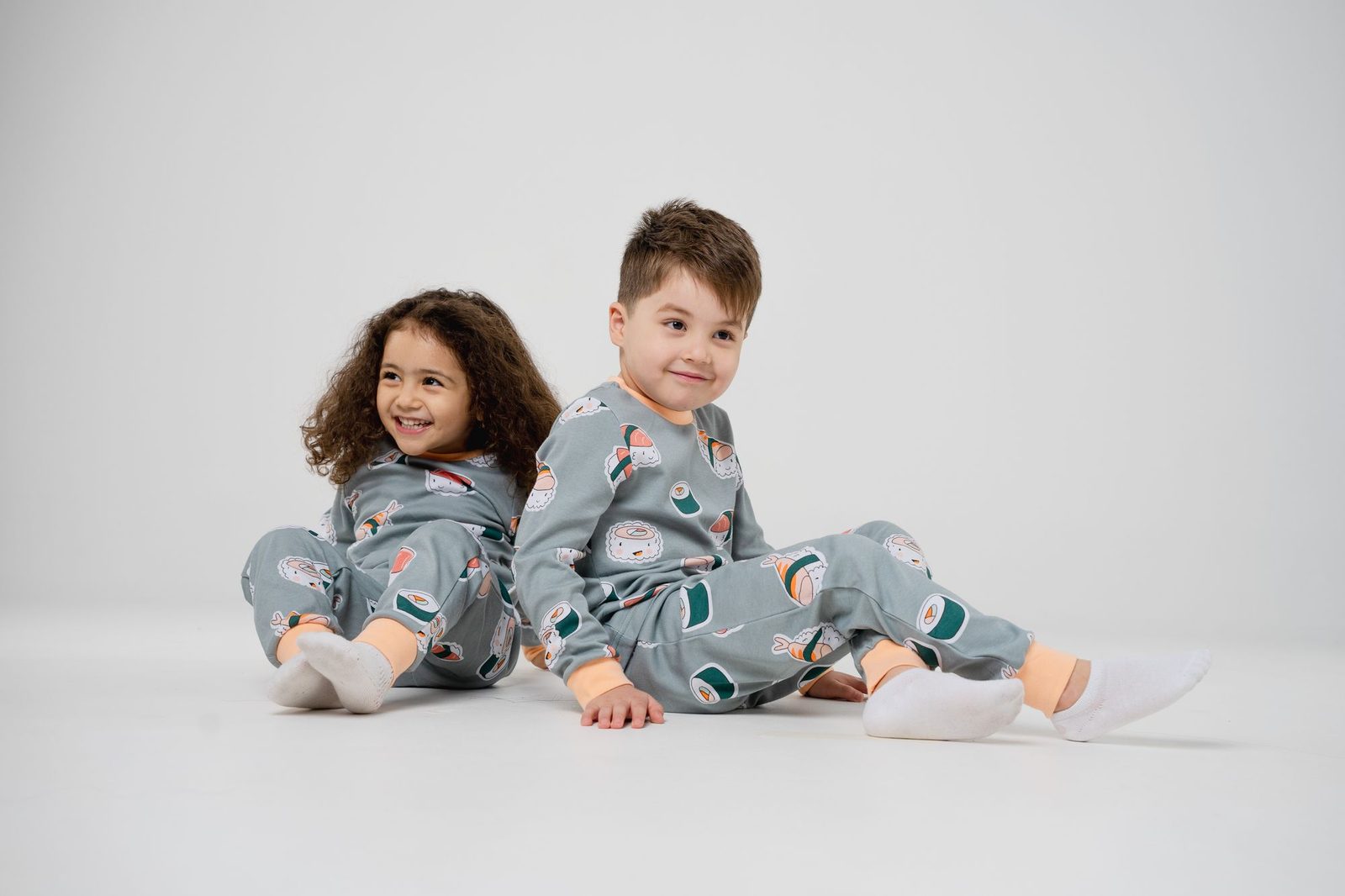
A children's pajama set can be listed as “100% cotton, flame retardant, breathable” and still be a problem — not because of the cotton, but because of the second claim. US children's sleepwear regulations do not treat “flame resistant” as a marketing upgrade. They set out separate paths by size and construction, and each path carries its own label language. A tight-fitting pajama that follows the snug-fit path must carry a label reading “WEAR SNUG-FITTING, NOT FLAME RESISTANT.” If the same product page calls the garment flame retardant, the listing and the required label are telling buyers two different things.
The fix is not to soften the adjective. It is to decide which path the garment actually qualifies for, confirm the label and paperwork match that path, and then make every claim — title, bullets, description, images, video, and live script — consistent with it.
Start with scope, not the adjective
CPSC defines children's sleepwear as wearing apparel up to size 14 — nightgowns, pajamas, robes, and similar items such as loungewear — intended to be worn primarily for sleeping or activities related to sleeping. Diapers, underwear, infant garments, and tight-fitting garments are handled differently. The last two are excepted from the full flammability testing in 16 CFR parts 1615 and 1616 and instead must meet 16 CFR part 1610 (and part 1611 for vinyl film) plus specific construction and labeling rules.
Scope is decided by how the product is intended, promoted, and merchandised, not only by the category name you pick in Seller Center. CPSC's sleepwear FAQ says loungewear marketed for bedtime, story time, or lounging is treated as sleepwear. A one-piece footed garment with a front or back opening that extends to the waist or longer is generally treated as sleepwear. Children's robes worn at home, including plush and bathrobes, are generally in scope. A beach or pool cover-up above the knee is generally not, if it is not promoted as sleepwear.
| What you are selling | Likely treated as children's sleepwear? | What decides |
|---|---|---|
| Two-piece pajama set, sizes 2T–5 | Yes | Intended for sleeping and within sizes 0–14 |
| Nightgown or at-home robe | Yes | Style, fabric, and how it is promoted |
| “Loungewear” set marketed for bedtime | Yes | CPSC treats sleep-related loungewear as sleepwear |
| Thermal underwear marketed only as thermal underwear | Generally no, if it is not promoted for sleep | Marketing and design; it must not be presented as sleepwear |
| Baby wearable sleep bag | Depends | If the baby wears sleepwear underneath, CPSC staff treats the bag as general apparel under part 1610; if the baby wears only a diaper, the bag is sleepwear under part 1615 |
| Diapers and underwear | Excluded | Explicit exclusions from the sleepwear definition |
| Tight-fitting pajama | Yes, but excepted from part 1615/1616 testing | Must meet the tight-fitting definition, part 1610/1611, and the labeling rules |
A listing that calls a garment “pajamas” has already told the platform and the buyer what it is for. Renaming it “loungewear” does not take it out of scope if the photos, copy, and video still sell it for sleeping. Scope follows the whole presentation.
The three compliance paths, and what each can say
There is no single “sleepwear certificate” that covers every garment. The applicable path depends on the size, measurements, construction, and testing history of the specific product.
| Path | What must be true | Required labeling | Claim discipline |
|---|---|---|---|
| Full flammability testing under 16 CFR 1615 or 1616 | Fabric production units and garment production units are tested and pass the standard; records are kept | Unit identification label, flame-resistance care label, tracking label | You may describe the garment as meeting the tested standard; do not call it “CPSC approved” |
| Tight-fitting garment under 1615.1(o) or 1616.2(m) | Meets the maximum chest, waist, seat, upper arm, thigh, wrist, and ankle dimensions; trim extends no more than 6 mm (1/4 inch); passes part 1610/1611 | Size label; yellow hangtag with the required warning; “WEAR SNUG-FITTING, NOT FLAME RESISTANT” on the center-back sizing label | You cannot claim the garment is flame resistant or flame retardant |
| Infant garment under 1615.1(c) | Sized 9 months or smaller; one-piece length no more than 64.8 cm (25.75 in); two-piece pieces no more than 40 cm (15.75 in); passes part 1610/1611 | Size label in months, visible at retail or on the package | No part 1615/1616 testing; do not imply flame resistance |
For the full-testing path, CPSC's FAQ describes fabric production unit (FPU) testing and garment production unit (GPU) testing, including prototype and production seams. Records matter because the claim has to be tied to a specific production unit, not to a one-off sample. The labeling set is broader too: unit identification, a care label with instructions that protect flame resistance, and a tracking label.
The tight-fitting path is the one most often misread. “Snug-fitting” is not a style adjective. It is a set of maximum measurements, a trim limit, a part 1610/1611 result, a size label, a yellow hangtag, and a permanent statement on the center-back sizing label that the garment is not flame resistant. A garment that misses any of those requirements cannot borrow the snug-fit path; it needs full testing.
The infant-garment path is narrower than “baby clothes.” It applies to garments sized 9 months or smaller that meet the length limits, pass part 1610/1611, and carry a size label in months. A garment sized 9 months or smaller that does not meet those conditions must be tested under part 1615.
“Flame retardant” is not a synonym for “flame resistant”
The required statement on a tight-fitting garment is written in plain language: “WEAR SNUG-FITTING, NOT FLAME RESISTANT.” That is the label the buyer sees. A listing that says “flame retardant” is not a more technical version of the same idea; it is a different claim, and on a snug-fit garment it directly contradicts the required label.
Treat “flame retardant” as a description of a chemical treatment or material property, not as a compliance status. If a fabric is treated, that fact may be relevant to testing, but it does not create a permission slip to ignore the path the finished garment is sold under. A tight-fitting garment that carries the “NOT FLAME RESISTANT” statement should not be marketed as flame retardant in the title, bullets, image text, video, or live commentary.
The same discipline applies to “CPSC certified” and “CPSC approved.” CPSC does not certify or approve children's products. Compliance runs through testing at a CPSC-accepted laboratory and a Children's Product Certificate issued by the manufacturer or importer. What a Children's Product Certificate does and does not prove is a separate question from whether “flame resistant” is the right word on a pajama listing.
Where the claim lives — including the parts you did not think of as labeling
For scope and for platform review, the claim is not limited to the label sewn into the garment. It includes the product title, bullet points, description, A+ or rich content, image text, video captions, spoken lines in a TikTok video, live selling commentary, FAQ copy, and the brand's own website. Guidance in other product categories makes the same point: claims made through websites, advertising, promotional activities, and testimonials count, not just the label.
Fiber content is not a flammability result. CPSC's sleepwear FAQ notes that untreated 100% cotton, 100% silk, 100% rayon, and 100% modal garments typically fail the full sleepwear flammability tests. Those fabrics may still work on the tight-fitting or infant-garment path if the garment meets the construction and labeling criteria and passes part 1610/1611. But “100% cotton” does not mean “fire safe,” and a listing should not imply that it does. If you are also making a fiber claim, keep it separate from the safety claim and check the fiber labeling rules that apply to textiles.
One warning deserves special care: “DO NOT USE FOR CHILDREN'S SLEEPWEAR” printed on fabric or a bolt is an instruction, not a merchandising suggestion. It means the material is not intended for sleepwear. Putting that fabric into a child's pajama listing, or pairing the warning with “great for pajama day,” does not neutralize it.
The examples below are hypothetical wording, not real listings or enforcement cases.
| Hypothetical listing line | Why it is risky | Safer direction |
|---|---|---|
| “Flame retardant pajamas for toddlers” | Contradicts the “NOT FLAME RESISTANT” statement required on a tight-fitting garment; “retardant” is not a compliance status | Remove the claim; state the actual path and use only the required label language |
| “100% cotton, so it will not catch fire” | Fiber content is not a flammability test result; untreated cotton typically fails full sleepwear testing | Keep fiber content factual and separate from any safety inference |
| “Snug-fitting for safety” | Snug fit is a measured construction standard, not a marketing adjective | Use it only if the measurements, trim, tags, and labels meet the rule |
| “CPSC certified sleepwear” | CPSC does not certify or approve products | Say the garment meets 16 CFR 1615/1616 only when test records support it; explain the CPC separately |
| “Do not use for children's sleepwear — great for pajama day” | The warning says the material is not intended for sleepwear | Do not use that material for sleepwear or promote it that way |
What TikTok Shop asks for before the claim can stand
TikTok Shop's Kids' Fashion Products Requirements page (published June 24, 2026) says sellers are responsible for CPSC compliance, including import and e-filing obligations. The platform may require, through the Qualification Center, a Children's Product Certificate, a test report from a CPSC-accepted laboratory, and product photos showing the tracking label. The CPC must be issued within the last 365 days, be in English, identify the manufacturer or importer and the accredited laboratory, and list all applicable safety rules. The test report must support the CPC and match the listing and photos.
Two platform details matter for sleepwear specifically. First, the published list of allowed Kids' Fashion products names tops, bottoms, dresses, coats, jackets, underwear, and socks, plus swimwear, footwear, accessories, and bags. Sleepwear and pajamas are not named in that list. That does not automatically make them prohibited, but it does mean you should confirm category qualification in Seller Center before you build a campaign around the product. Second, the documents must describe the same product as the listing. A CPC for a t-shirt does not cover a pajama set, and a test report for one fabric or style does not cover a different construction.
TikTok Shop may also enforce through category-qualification rejection, account health deductions, listing removal, or loss of selling access. The practical lesson is that the listing claim and the compliance file are reviewed together. A well-written product page cannot rescue a certificate that names a different item, and a valid certificate does not make an overstated adjective accurate.
A review pass before you publish
- Name the path. For each sleepwear SKU, write down whether it is full-tested, tight-fitting, or an infant garment. If you cannot name the path, you are not ready to write the claim.
- Read the sewn label and hangtag. A tight-fitting garment must say “WEAR SNUG-FITTING, NOT FLAME RESISTANT.” The listing cannot say the opposite.
- Measure the garment, not the model. Check the maximum dimensions and the 1/4-inch trim limit against the actual production size, not a sample photo.
- Audit every claim location. Title, bullets, description, image text, video captions, spoken script, live talking points, FAQ, and your own website.
- Separate fiber from safety. “100% cotton” is a fiber statement. It is not evidence that a garment is flame resistant.
- Match the paperwork. The CPC, test report, tracking label, product photos, and listing must all describe the same product.
- Check scope words. “Loungewear,” “sleep set,” “bedtime,” “pajama party,” and similar phrases can put a product in the sleepwear conversation even when the category label says something else.
- Run the wording check before the shoot. Flag contradictions between the copy and the required label before a video or live script locks them in.
What a wording check can and cannot do
A claim checker can help you find risky wording in English text, captions, and a video transcript, and it can suggest a rewrite that does not contradict the required label. The TikTok Shop claim checker is built for that kind of pre-publish review, and ecommerce listing review covers titles, bullets, and descriptions.
It cannot measure a garment, decide whether a product is in scope, verify a Children's Product Certificate, confirm that a fabric passed a production-unit test, or approve a label. It also cannot guarantee that TikTok Shop will accept a listing or that a product is legally compliant. Text inside an image and a spoken claim in a video are separate review problems from the text you paste into a checker. Use the checker to catch contradictions, then resolve the underlying compliance question with the standard, the test records, and qualified advice.
Frequently asked questions
Do all children's pajamas have to be flame resistant?
No. Full-testing garments are designed and tested to resist ignition and self-extinguish under the standard. Tight-fitting garments and infant garments are excepted from parts 1615 and 1616 testing, but they must meet the specific measurement, construction, part 1610/1611, and labeling requirements. A tight-fitting garment is expressly labeled “NOT FLAME RESISTANT.”
Can I call a treated fabric “flame retardant”?
Only if the statement is true, substantiated, and consistent with the required label. A tight-fitting garment that bears “NOT FLAME RESISTANT” cannot be marketed as flame retardant. Treat the term as a description of a treatment or material property, not as a compliance badge.
Is “snug-fitting” a way to skip testing?
Only when the garment actually meets the tight-fitting definition: maximum dimensions for each size, trim no more than 1/4 inch from the surface, part 1610/1611 compliance, a size label, the yellow hangtag, and the center-back “WEAR SNUG-FITTING, NOT FLAME RESISTANT” statement. If it misses any of those, it needs full testing.
Is loungewear covered by the sleepwear rules?
If it is intended or promoted for sleeping or sleep-related activities, CPSC treats it as sleepwear. The cut, fabric, photos, and marketing all matter. Calling a pajama set “loungewear” does not remove it from scope when the listing still sells it for bedtime.
Does a Children's Product Certificate prove my “flame resistant” claim?
A CPC lists the rules the product was certified to and identifies the supporting test report. It does not make a marketing phrase accurate by itself. The certificate, report, label, and listing must all describe the same product, the same construction, and the same compliance path.
Sources
- CPSC, Children's Sleepwear FAQ: https://www.cpsc.gov/FAQ/Childrens-Sleepwear
- CPSC, Infant Garments and Tight-fitting Sleepwear Garments FAQ: https://www.cpsc.gov/FAQ/Infant-Tightfitting-Garments
- 16 CFR Part 1615, Standard for the Flammability of Children's Sleepwear: Sizes 0 Through 6X: https://www.ecfr.gov/current/title-16/chapter-II/subchapter-D/part-1615
- 16 CFR Part 1616, Standard for the Flammability of Children's Sleepwear: Sizes 7 Through 14: https://www.ecfr.gov/current/title-16/chapter-II/subchapter-D/part-1616
- CPSC, Children's Product Certificate: https://www.cpsc.gov/Business--Manufacturing/Testing-Certification/Childrens-Product-Certificate
- TikTok Shop US, Kids' Fashion Products Requirements (published 2026-06-24): https://seller-us.tiktok.com/university/essay?knowledge_id=6970324132710190&lang=en
Let automated checks keep track of these rules
Sign up to receive 100 credits and check English copy, videos, and images, with the regulation or platform rule behind every flag.
Sign up for free