TikTok Shop Before-and-After Posts: What a 'Results May Vary' Disclaimer Can and Cannot Fix
TikTok Shop permits a results disclaimer only for before-and-after and time-based comparisons. Federal law asks a different question: can you substantiate the result and tell viewers what consumers generally achieve? A practical review sequence, two comparison tables and four hypothetical rewrites for appearance-focused posts.
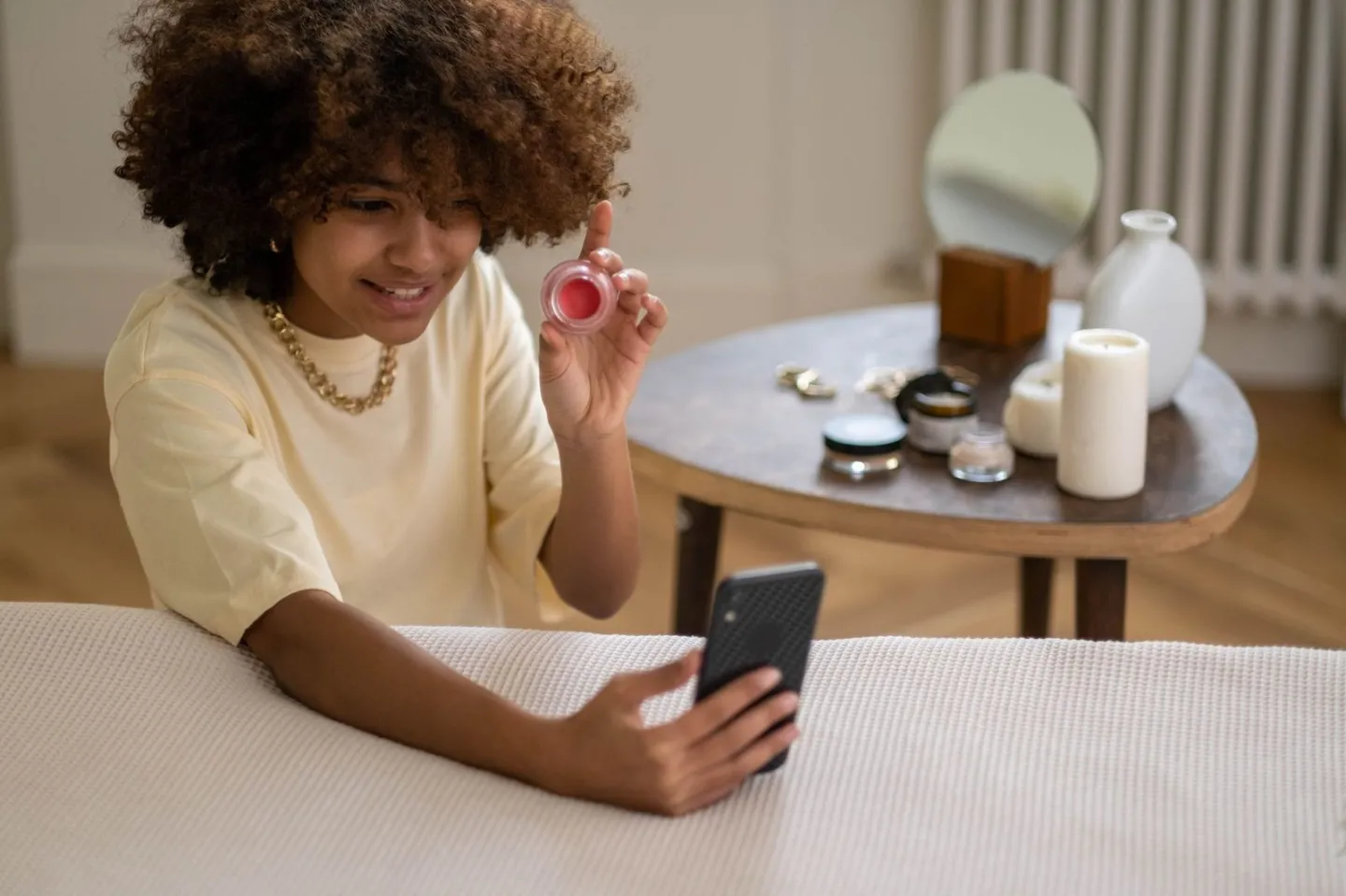
A before-and-after clip is one of the most persuasive assets a TikTok Shop creator can post, and one of the easiest to get removed. The mistake is treating the disclaimer as the compliance step. TikTok Shop allows a results disclaimer in only two situations. Federal law asks a different question that a “results may vary” line does not answer on its own. This article separates the two tests, shows where appearance-focused comparisons usually fail, and gives a review sequence you can run before filming.
TikTok’s How to Avoid Misleading Content page, dated 06/25/2026 on the US Seller University, and the federal rule at 16 CFR 255.2 were opened for this review on 2026-11-02. The rule was last revised in 2023 (88 FR 48102). Re-check both before you rely on the details; platform pages change without a public changelog.
The two tests, side by side
TikTok Shop decides whether a post may stay up. The FTC decides whether an ad is deceptive. Passing one does not mean passing the other.
| Question | TikTok Shop content policy | Federal advertising law |
|---|---|---|
| What it governs | Videos, LIVEs and video descriptions on TikTok Shop | Advertising claims, including testimonials and images, in any medium |
| What the disclaimer must do | Tell viewers results may vary, only for before-and-after or time-based results | Disclose the generally expected result when the depicted experience is not shown to be representative |
| What must be true underneath | Content matches the product detail page and packaging; no filters or edits that fake the result | The advertiser possesses and relies on adequate substantiation for the claim the post makes |
| What a disclaimer cannot fix | Weight-management and medical claims | An unsubstantiated or out-of-scope result claim |
| Consequence | Content removal up to account suspension | FTC Act Section 5 enforcement exposure; the remedy depends on the theory and any rule or order involved |
What TikTok Shop actually permits
The policy is narrower than most creators assume. Disclaimers are permitted only when the post shows a before-and-after comparison or refers to a time-based result such as “results in X days.” Anywhere else, a disclaimer is not a repair tool.
When one of those two formats is used, the page says the post must tell viewers that results may vary. Its acceptable examples are short: “Individual results may vary,” “Results may vary depending on your skin sensitivity,” and “Not a guarantee of individual results.” For short-term effects, the post must say the effect is temporary or not permanent, and that statement has to be consistent with the product detail page.
The page also lists what it treats as a violation even when a disclaimer is present:
- Skin-tightening comparisons enhanced with filters, editing tools or visual effects.
- Instant removal of eye bags after one use when the effect is exaggerated or unrealistic.
- Before-and-after shots made more dramatic by changing lighting, makeup or camera effects.
- Darkening the “before” skin tone or body area to make the “after” look brighter.
- Results that go beyond the product’s actual functional scope, such as strong brightening claims for an exfoliant.
- Hair-growth side-by-side comparisons without a results-may-vary disclaimer.
One sentence on the page deserves its own paragraph: “Adding disclaimers does not make them acceptable.” In context, “them” means weight and medical claims. A results line does not convert a medical claim into an appearance claim. If the post implies the product treats acne, hair loss or another condition, the question is no longer whether the disclaimer is worded well.
Why “results may vary” is not the FTC standard
Federal law starts from a different premise: a testimonial is a claim by the advertiser. Under 16 CFR 255.2(a), a consumer endorsement about a product’s performance is interpreted as a representation that the product is effective for the purpose shown. The advertiser must possess and rely on adequate substantiation, including competent and reliable scientific evidence when appropriate. A consumer endorsement is not, by itself, competent and reliable scientific evidence.
Paragraph (b) is the part that catches before-and-after posts. When an endorsement relates to a central or key attribute, the ad is likely to be read as saying the endorser’s experience is representative of what consumers generally achieve. If the advertiser cannot substantiate that the experience is representative, the ad must clearly and conspicuously disclose the generally expected performance in the depicted circumstances, and must substantiate that disclosure too. The disclosure has to change the net impression, not sit in fine print.
The rule’s own example is blunt. Three heat-pump testimonials reported monthly savings of $100, $125 and $150. Fewer than 20% of buyers saved $100 or more. The Commission said a line such as “Results not typical,” or even “These testimonials are based on the experiences of a few people and you are not likely to have similar results,” was insufficient, because viewers would still take the advertised savings as representative.
For health-related products, the FTC’s Health Products Compliance Guidance (published 2022-12-20) repeats the point: testimonials that report results more dramatic than users can generally expect are likely deceptive, and a “Results not typical” disclaimer does not cure the deception. Its Example 41 involves a weight-loss before-and-after with a fine-print disclaimer; the Commission said the disclosure did not convey that typical weight loss was much lower.
Put simply: TikTok asks whether the disclaimer is allowed and present. The FTC asks whether you can prove the result and tell viewers what people generally get. “Individual results may vary” can satisfy the first and still fail the second.
Where appearance-focused before-and-after posts usually fail
1. The edit becomes the claim
Changing the light, the angle or the makeup changes the result being advertised. TikTok names these edits directly. Under FTC principles, the image is part of the claim, so an edited “after” can be deceptive even if the caption is careful.
2. The “before” is manufactured
Darkening skin, adding shine or choosing a worse angle creates a difference the product did not produce. That is a comparison problem, not a disclaimer problem.
3. The result exceeds what the product does
An exfoliant that smooths texture is not a brightening treatment. A moisturizer that reduces dryness is not an acne treatment. When the visual promises a function outside the product’s scope, the fix is to change the visual or the product claim, not to add a line of text.
4. The timeframe is missing
“After four weeks of consistent use” is a claim about duration. Without it, viewers can read a four-week result as an overnight one. TikTok treats a time-based outcome as a disclaimer scenario; its own acceptable example pairs a stated timeframe with “Individual results may vary.” The FTC reads an unstated timeframe as part of the net impression.
5. A medical claim hides behind an appearance claim
“Cleared my acne,” “regrew my hairline” and “cured my eczema” are disease claims, even when they appear in a cosmetic before-and-after. TikTok says disclaimers do not make weight and medical claims acceptable. The FDA line is separate and stricter: a product that claims to treat a disease moves toward drug territory, which is why cosmetic claims substantiation treats this as a product-positioning question, not a wording one.
A review sequence before you film
- Name the result in one sentence. If you cannot say what changed without naming a disease, stop and rewrite the concept.
- Check the product detail page. Every attribute, ingredient and effect shown must appear there. TikTok compares the post to the product detail page and packaging.
- Collect the evidence for the depicted result. Anecdotes are not substantiation under the FTC standard. If the post implies a typical result, you need support for typicality, not just one happy user.
- Decide whether the result is representative. If it is not, state the generally expected result plainly. Do not rely on “results may vary” alone.
- Shoot the comparison without enhancement. Same light, same angle, same makeup, same camera settings. Keep the raw files.
- State the timeframe. Say how long the product was used and whether the effect is temporary.
- Add the platform disclaimer in the visual and the caption. TikTok requires the disclaimer for the comparison; put it where it is hard to miss.
- Re-read the post as a claim. Ask what a reasonable viewer would believe the product does for them, then check whether you can prove that belief.
Four hypothetical rewrites
The examples below are hypothetical and are not reviews of any real product or creator.
| What the post shows | Why it fails | A more defensible version | Evidence you still need |
|---|---|---|---|
| Skin looks tighter after one use, with a filter on the “after” | The visual effect creates the result; TikTok prohibits filters and edits in such comparisons | “After 4 weeks of daily use. Individual results may vary.” Shot with identical lighting and no filter | Product records and, if a typical result is implied, support for that expectation |
| “This serum cleared my acne in 10 days” | A disease claim; a disclaimer does not make it acceptable | “This serum helps skin look clearer and feel less oily,” only if the product detail page and evidence support it | Product positioning as a cosmetic, with no drug claim, plus substantiation for the cosmetic claim |
| Hair-growth side-by-side with no disclaimer | TikTok explicitly requires a results-may-vary disclaimer on this format | The same comparison with a clear “Results may vary” line and a stated timeframe | Support for the growth claim; if hair restoration is implied, an FDA drug analysis |
| “Eye bags gone instantly” | An exaggerated or unrealistic one-use result, outside the product’s function | Describe the immediate cosmetic appearance, not the removal of a condition | Evidence that the described immediate effect is what the product does |
What a claim checker can and cannot do
A text checker can flag risky phrasing in a caption or script, including disease terms, quantified promises and missing timeframe language, and suggest a rewrite. The TikTok Shop claim checker applies a rule library to the words you paste; the skincare claim checker is narrower to that category. Neither can tell you whether the filmed result is real, whether the “before” was altered, or whether you can substantiate the claim. Those are evidentiary questions about your product and your footage.
Image review is also limited. Moderation can detect risky content, but it does not establish that a claim written inside an image is compliant. A clean result is a prompt to review, not an approval.
FAQ
Is “Individual results may vary” enough for TikTok Shop?
It is one of the phrases TikTok lists as acceptable for a before-and-after or time-based result. It is not a substitute for substantiation, and it does not make a weight-management or medical claim acceptable.
Can I use a before-and-after if I have a clinical study?
A study helps only if it supports the specific result depicted and the claim the post makes. Under 16 CFR 255.2, the endorsement still must be substantiated, and a dramatic result that is not representative needs a clear disclosure of what consumers generally achieve. A study does not turn a disease claim into a cosmetic claim.
Does this apply to LIVEs and video descriptions?
Yes. TikTok says the misleading-content guidance covers product videos, LIVEs and video descriptions. FTC advertising law is not limited to a single format either; spoken claims, captions and on-screen text can all be part of the ad.
What about weight-loss before-and-after posts?
Treat them as a separate, stricter category. TikTok restricts weight-management claims and says disclaimers do not make weight and medical claims acceptable. Product eligibility is also separate from content rules. For that layer, see the health-claims review workflow and the medical-claims guide.
Can ByeRisk approve my post?
No. A review can flag language and suggest rewrites; it cannot guarantee platform approval, restore an account, or establish legal compliance. Testing, registrations and legal review sit outside what a wording check can do.
The takeaway
TikTok Shop’s disclaimer rule is a format rule. It tells you when a results line is allowed, not whether the result is defensible. The FTC question is the harder one: can you support the result, and does the post tell viewers what people generally achieve? Answer that before you film, and the disclaimer becomes the last step instead of the whole strategy.
If you want a second pass on the wording, the TikTok Shop review workflow covers videos, LIVE scripts and listings, and the violation-points guide explains what happens after enforcement.
Let automated checks keep track of these rules
Sign up to receive 100 credits and check English copy, videos, and images, with the regulation or platform rule behind every flag.
Sign up for free